
When Young Hee was a child, her father was killed in Korea for his politics during Park Chung Hee’s military dictatorship. Young Hee, along with her now single mother, little brother, and older sister, fled Korea for America. Her family settled in an apartment on the aptly named Ithaca Street in the Elmhurst neighborhood of Queens, NY. Acceptance to Cornell would not have been easy for Young Hee. As a high school student, she had to manage both caring for her younger brother, who had special needs, and working at the deli her sister operated, all while excelling academically.
.jpeg)
On move-in day, Young Hee met her two new roommates Jane Niehaus and Erin Coleen Nieswand, along with her four suitemates, Diane, Melissa, Jeannie and Agnieszka. Young Hee, Jane and Erin shared a triple; three beds, three desks, and all of their things crammed into one tiny room. They decorated the triple with photos from home and clips of the cartoon character, Ziggy. Diane and Agnieszka each had a single, and Jeannie and Melissa shared a double on the opposite end of the suite.
Erin was from Long Valley, New Jersey, a small, tight-knit community near Rutgers, where her dad was the dean of what is now the School of Environmental and Biological Sciences. A standout student at West Morris Central High School, Erin was on the softball, field hockey and basketball teams, and was an all-state athlete in all three sports. According to her younger sister, Kelly, now 56, Erin was a “Superstar…she excelled in everything she did growing up.”
Erin’s parents could have sent her to Rutgers for free, but decided to pay for their daughter to go to Cornell, her first choice school. There she walked onto the women’s basketball team and was studying in Cornell’s College of Arts and Sciences.
Jane, the eighth of twelve kids, was born in Ohio and moved to Louisville, Kentucky when she was young. Her mom was a substitute teacher and her dad a chemical engineer. She was also studying in the Arts and Sciences college. Because Jane’s family was in the process of moving to Charlottesville, Virginia, she flew into Ithaca and moved in alone, Nieswand’s parents helping her settle in.
Jane, now 61, told me, “It was just the ideal roommate situation.” As the Ithaca summer turned to a brisk fall, the three roommates became like a family. Each of them would try on each other’s clothes, have “silly dance parties to blow off steam”, help each other with essays, and Young Hee would sleep every night with Jane’s teddy bear. Young Hee would “make sure to bring little food items” that she thought her roommates would like. On one occasion, the girls got a big laugh after Erin and Jane tried Young Hee’s Korean bean curd cake thinking they were little chocolates.
YoungHee(right).jpeg)
The 1983 freshmen class was oversubscribed, which is why the girls had been placed in a forced triple room. But when Cornell offered one of the roommates the opportunity to move out, the girls refused.
Young Hee, with her own group of friends, stayed involved with the Korean American Student Association. Erin and Jane made new friends and grew even closer. “We ate together. We went out socializing together. We took an English class together,” Jane said. “We were really inseparable.” Erin began dating Alfredo Martel, from Guaynabo, Puerto Rico, who she met through varsity athletics.
Kim would contact Young Hee incessantly throughout her first semester, calling her and sending letters and gifts, despite Young Hee’s continual requests for him to stop. Very often, Kim would call, and according to Jane, because Young Hee was too “sweet and polite” to forcefully refuse Kim, she would tell Jane or Erin to talk to him. Jane recalls being on the phone with Kim a number of times, speaking very slowly due to Kim’s poor English. “Young Hee is in college. She is studying. She doesn’t want to talk to you,” she would tell him. At the time, blocking a phone number was complicated if not impossible.
In spite of what was widely reported, at no point were Kim and Young Hee ever involved romantically. It is unclear how Kim learned Young Hee’s address or phone number when she arrived at Cornell. Court records claim that, “At some point during the semester, Kim came to Cornell and took Young Hee out to dinner.” Jane does not remember this having happened and denies that Young Hee did anything but refuse Kim’s advances.
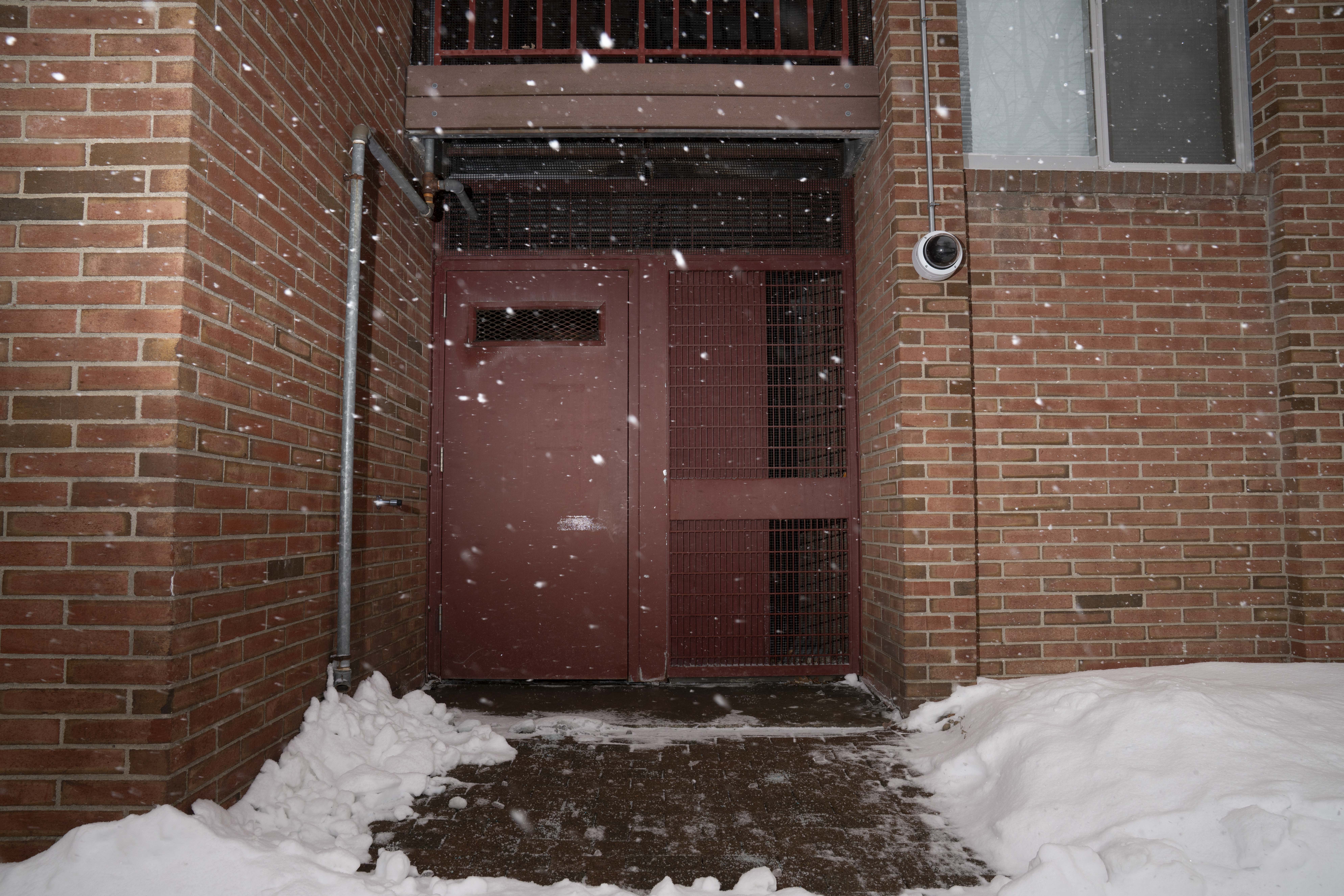
Over Halloween weekend, Erin, Jane and another friend were ready to go out as the three musketeers, when Kim arrived at their dorm unannounced. He wanted to see Young Hee. It is unclear exactly how Kim entered the dorm on North Campus. It likely would not have been difficult. Doors were often propped open by students, had defective locks, or someone simply let him in. Low Rise 7 also had windows that could be opened from the outside. At the time, students said, “With residents of the dormitory coming and going, it would have been easy for Mr. Kim to gain entry for the asking, particularly because he knew the names of resident students.”
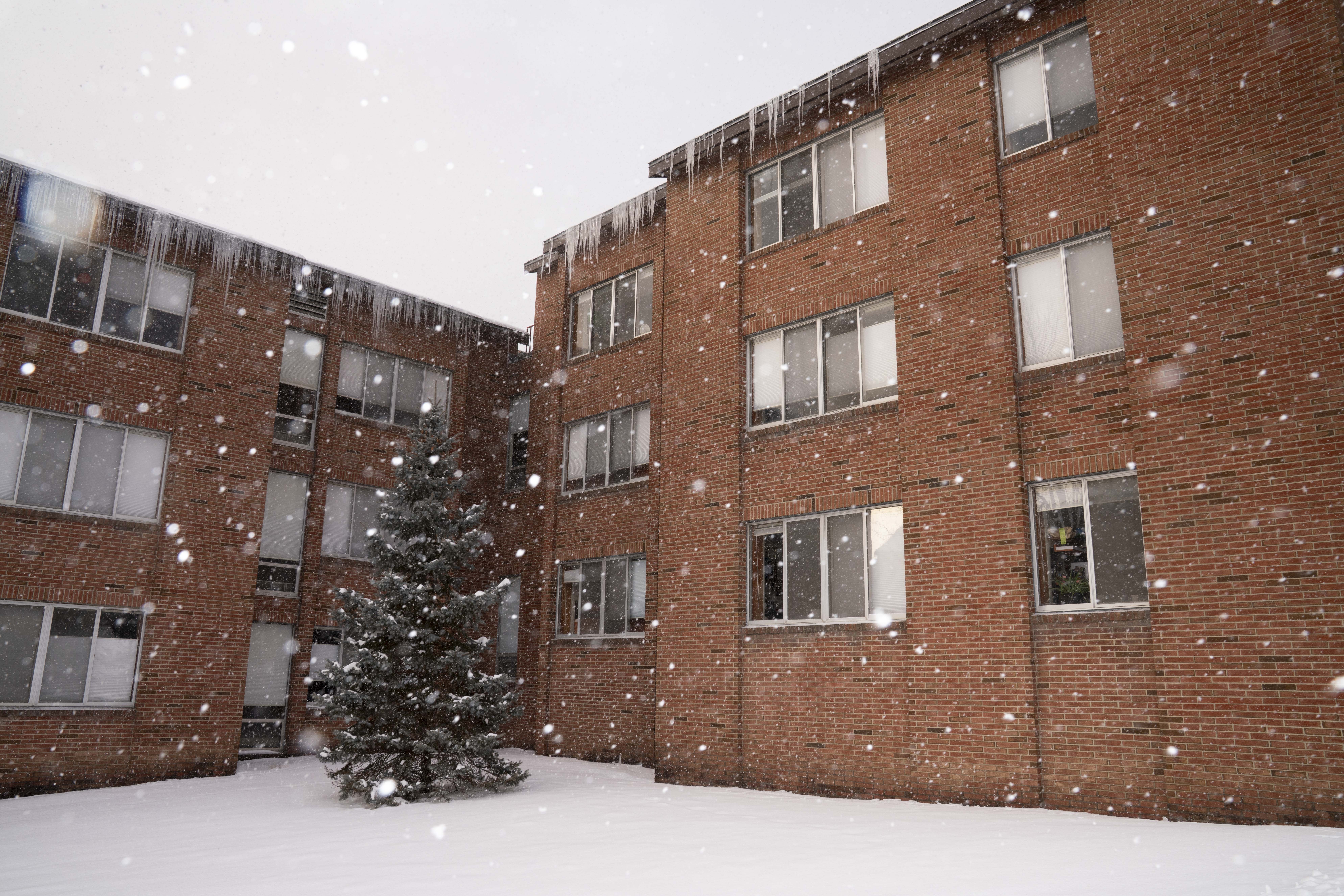
When Young Hee learned that Kim was there, she hid in the room of her Residential Advisor. She at first told the advisor to tell Kim she was away, but later decided to talk to Kim herself. Kim refused to leave despite repeated requests from Young Hee and her roommates, and slept for at least a night in the dorm’s lounge.
Kim spent Halloween weekend “lurking around,” and “camping out,” in Low Rise 7, Jane said. After that weekend, perhaps spurred by his contact with Young Hee, Kim continued to send letters and call her even more adamantly.
On the night of December 14th, two days before their first final exam, Young Hee, Jeannie, Erin and Melissa were in their room when Kim began calling. He had sent Young Hee an unwanted winter coat and a love poem and was calling repeatedly to see if she had received them.
The roommates eventually decided to make a game of these repeated calls. Every time they picked up the phone, they put on a new accent, taking turns pretending to be a famous person or a fast-food place. Jane arrived at the dorm in the middle of this game and put an end to it as she needed to call her sister. They talked for an hour. According to her, “The second I hung the phone up, it immediately rang.”
It was Kim. He had not stopped dialing their dorm the entire hour Jane was on the phone. She picked it up and demanded what she and Erin and Young Hee had been asking for an entire semester at that point—for Kim to stop.
Young Hee returned to her dorm around 11 P.M. Realizing that Kim was there, she entered Diane’s single room with Diane and Melissa, and closed the door. She called Erin, who was with her friend Peter Browning. Both Erin and Peter rushed to the dorm. Kim, meanwhile, was in the hallway outside the suite. Young Hee opened the door to their suite and spoke to Kim. Around 11:30, she called David Kang, another Korean-American student and a close friend, informing him that Kim had arrived and was upset. Young Hee was trying to calm him. From the hallway, Kim followed Young Hee into her own room and attempted to close the door behind him. Erin, Peter, and Melissa entered the room, preventing Kim from closing the door. Diane entered a short while later. Around 11:40, David received another call from Young Hee, this time more urgently. Young Hee told David to come immediately and speak to Kim in Korean. He arrived shortly after.
It is unclear exactly what happened in the room. Kim was possibly offended by being taunted the other night. But up until this point, he had never shown signs of being violent.
A few minutes after 11:40, Kim pulled a sawed-off .22 caliber Marlin rifle from under his trenchcoat. He ordered everyone—Peter, Melissa, Diane, David, Young Hee and Erin—to stay in Young Hee’s room and locked the door, saying no one was allowed to leave.
“Time slowed down. I had never been in that situation, and I didn’t know what to do.” Peter, now 61, told me. “Up until then, he wasn’t a raging lunatic. He was a little more quiet and didn’t speak English. We really didn’t know what was going on…We were all frozen.”
David and Young Hee both pleaded with Kim in Korean, trying to calm him down.
The others stood frozen, silent in fear. Six kids huddled together, confused, terrified, in a room no more than a few feet across, with a gun pointed at them. After a few long moments of intense confusion, Young Hee translated: Kim wanted to kill them all.
“There were three of us, plus all our suitemates, Agnieszka, Diane, Melissa, Jeannie. We all knew each other. And, normally somebody was in the suite at all times, so we didn’t bother to lock our door ever…So I get up to our door. Door is locked. I twist the knob. I’m knocking, ‘Hey, are you guys in there?’ I can hear someone’s in there.”
“I read the dry erase board that’s mounted on the outside of the door. There was a note in Erin’s handwriting,” Jane recalled. “Young Hee, Kim is here.’”
Then from inside her dorm room came Young Hee’s voice.
“Jane, go away!”
She would later learn that Kim, recognizing her voice, wanted her to come inside.
Jane, still unsure what was happening, went to Jeannie and Melissa’s room.
“Jeannie is sitting white as a ghost at her desk. She’s frozen in fear. She does nothing. ‘Jeannie, what is happening, why is my door locked?’ Nothing. Cannot answer me.”
Inside Jane’s room, Young Hee begged Kim to let everyone go except for her. David told The New York Times, “She really showed her love for us.” According to David, Young Hee asked Kim in Korean, “What did these other people do to you?”
At 11:50, almost 10 minutes since Kim had taken the group hostage, he let everyone leave. Everyone, except for Young Hee and Erin.
Diane fled. Peter and Melissa ran into Jeannie’s room with Jane. David hid under the stairs in the hall.
“Peter and Melissa came in and locked the door, saying, ‘There's a guy in there with a gun. He's gonna kill them.’” Jane told me. “They don't say it's Kim. They say, ‘A guy and a gun, he's gonna kill them.’ And I said: Kill who?’”
“Erin and Young Hee.”
Jane left Jeannie and Melissa’s, intending to see what was going on in her room. She told me, “I immediately lock the door behind me, and I hear the gunshots…So I'm now in the hallway, and I am locked out of every other room…Then I pound back on the door. ‘Let me in.’”
Right as Jane was let back in, Kim ran from her room.
Today, Jane realizes how close she had been to death. “He held everyone hostage and then killed only Erin, the person who lives in that room, and Young Hee, the other person who lives in that room. Me, the third person who lives in that room, who he has physically seen, knows my voice from all those phone calls. I was not in the room.” Had Jane arrived even five minutes sooner that night, or if her friends had not let her in when they did, she likely would not be alive today.
Kim left the suite, ran down the hall, then exited through the fire escape. Jane waited for about a minute, then went into her room.
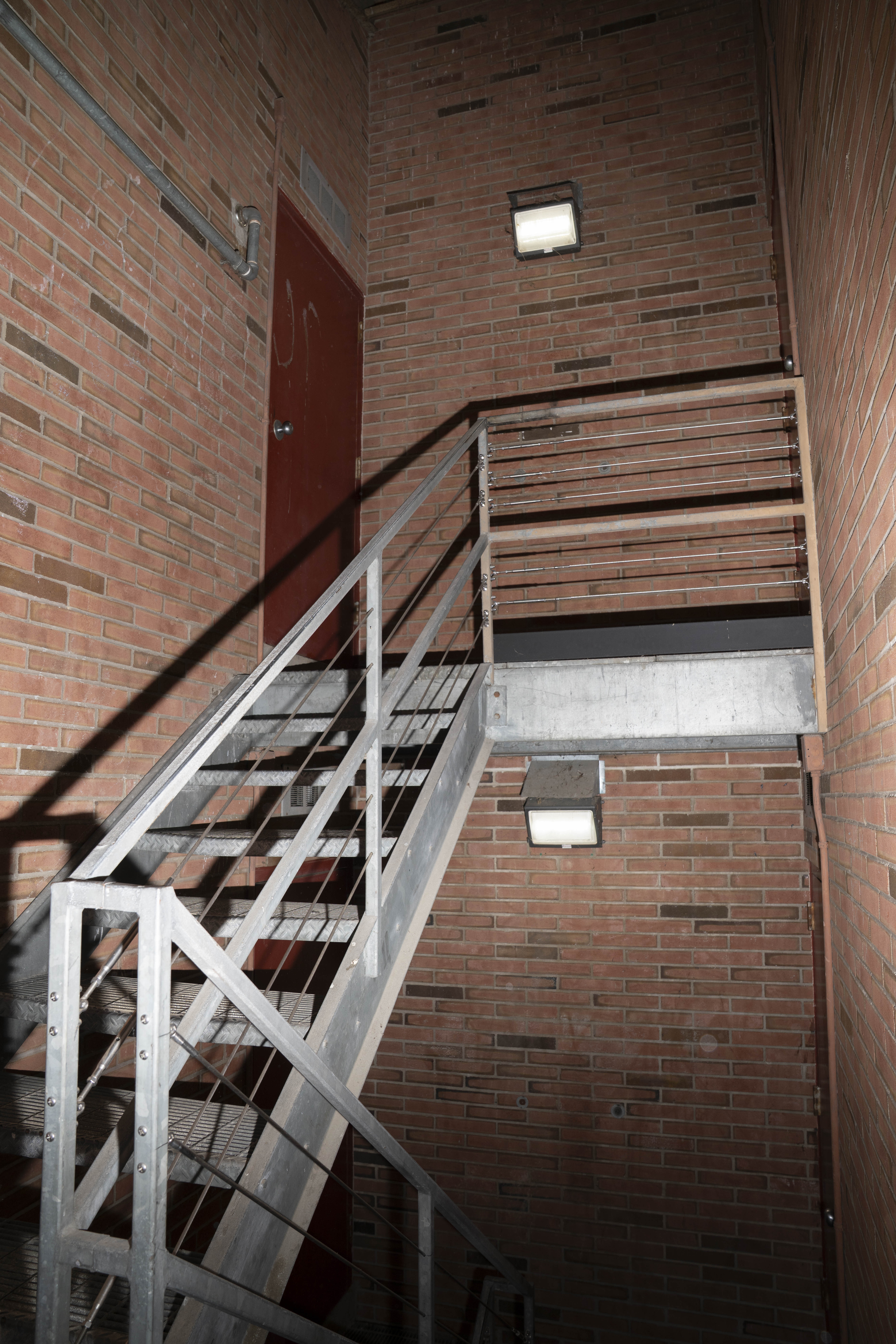
“Young Hee is towards the farthest back wall, eyes open, not moving,” she remembers. “Erin is closest to the door near one of our beds.” There was a trickle of blood running down Erin’s right temple. “She’s convulsing. Her eyes are fluttering and her body starts shaking. I think, 'Erin is not dead.’”
Jane hurriedly called 911. “My roommates have been shot! We need an ambulance, and we need to have the police come,’ I hang up, and then I go back to Erin.”
David climbed out from under the stairs and arrived back in the room and took Young Hee’s pulse. Nothing.
In minutes, two men from campus security arrived, about the same age as the students who had just been shot. They had briefly hid in the bushes outside the dorm before answering Jane’s call, worried for their own safety.
Being wholly inexperienced with crime scenes, campus security asked for a camera and to do a chalk outline of Erin’s body, as if they were detectives on a police procedural. They told Jane they would need to move the body. Jane responded, furious. “Get out of my room. We need an ambulance. I'm waiting for the police and an ambulance.”
When the paramedics arrived, they picked up Erin, revealing a pool of blood underneath her head. The blood Jane saw earlier on Erin’s temple was only the wound from a ricochet bullet. Erin had been shot directly in the back of the head, and was in much more serious condition than Jane had imagined.
Jane knew she had to call Erin’s parents. When they were both on the line, Jane told them: “Erin has been shot. She’s going to the hospital. They won’t let me go with her.”
Kelly remembers that her father “Never raised his voice, never raised his hand, and I remember being woken up, and he was cursing on the phone…I had never heard those words come out of my father's mouth, and I jumped out of bed, and I ran downstairs, and my mother was in the kitchen, and my dad was on the phone, and I just heard him say…
‘What do you mean she was shot?’”
Erin, in critical condition, was transported to the Tompkins Community Hospital and later the Upstate Medical Center in Syracuse.
Kim was spotted driving away by campus security guards. The guards chased him by car, radioing the Ithaca Police for help. Over five minutes and approximately five to seven miles, Kim raced from Low Rise 7 through Cornell’s campus into Tompkins County, and back into the city before being forced off of Route 366 close to Bartels Hall.
As police approached the car, Kim shot himself with the same gun he had used to kill Erin and Young Hee. He placed the barrel under his chin and fired, destroying his left eye and missing his brain.
He was taken to the Upstate Medical Center in the same ambulance as Erin. Kim had missed his brain, shooting out his left eye. He would go on to live for another 38 years. Erin lived for only a few more hours. After the shooting, Erin’s parents would be billed for both her and Kim’s transport.
A few minutes later, officers arrived at Alfredo’s dorm and told him what had happened, explaining that Erin was at the Tompkins Community Hospital but would likely be transferred to Syracuse. “One of my roommates had a car…we just got in his car and started driving to Syracuse,” Alfredo told me.
Just over two weeks before, Alfredo had been with Erin and her family for Thanksgiving. Now he was on his way to see her in the hospital. It was snowing as he and his roommates drove up to Syracuse. An ambulance, flaring its lights, passed them on their left. Alfredo knew that Erin was inside.
Jane and the others were taken to the police station, where they were questioned about what had happened. At some point Jane called her parents who arranged for her to be picked up by Cornell professor John Oliver, whose brother had served as an engineer in Korea with Jane’s father. She was picked up by Mrs. Oliver and arrived at the Oliver’s home on Cayuga Street around 2 A.M. Several friends and her brother came to console Jane, who was devastated and in shock.
At the hospital, the nurses initially refused to let Alfredo in. “I just kept asking hour after hour after hour,” Alfredo remembers. Erin’s parents had also arrived, but Erin was no longer responsive. “By the time [the nurses] realized that there was nothing they could do, they allowed me to see her while she was still alive.”
“That was an incredibly painful sight,” Alfredo recalls. “Unfortunately, that’s the last image I remember of her.”
At the Oliver’s, Jane managed to fall asleep in their daughter’s bedroom. She woke suddenly a few hours later and looked at the red LED lights of a digital clock. It read 5:00A.M., the exact time Erin died.
According to Jane, neither she nor Cornell University ever managed to contact Young Hee’s mother. She may have only first learned she had lost her daughter when news broke to thousands of other Cornell parents the following Monday morning on the front page of The New York Times.
Jane is unsure what happened to her other suitemates. For Peter, Alfredo and Kelly the following days were a blur. According to school officials at the time, some friends of Young Hee and Erin were so grief-stricken they needed to be sedated.
In the days following the shooting, Cornell students were in a state of fear and disbelief while completing their final exams. Kim was in custody, but the threat of violence and the cruelty of the event weighed heavily on the community.
Then University President, Frank H. T. Rhodes, told the Cornell Chronicle, “It's hard to convey the sense of sorrow and dismay that the whole Cornell community feels at this outrage. There's a particular sense of shock that such an act of mindless violence should occur anywhere, but especially on a university campus, a place dedicated to friendship and trust.” Examinations continued as scheduled, with exceptions only for any student “affected by the shooting.”

On Tuesday December 20th, three days after the murders, funerals were held for both Erin and Young Hee. Jane, Peter, Kelly and Alfredo attended Erin’s funeral at Our Lady of the Mountain Catholic Church in Schooleys Mountain, New Jersey. Jane sat side-by-side with Erin’s parents in the front pew. According to Alfredo, Erin’s entire town of Long Valley and Erin’s high school came. It was “an incredible outpouring of love and grief,” Alfredo told me.
A ceremony was also held in Anabel Taylor Hall in Ithaca that night. Portraits of the victims hung in the entryway. Chairs overflowed into the lobby to accommodate all who had come to mourn. On the table outside the chapel, a small bouquet of white carnations lay by a wooden cross, two white candles burning at either side. According to the Syracuse-Herald Journal, “Members of the Cornell Korean Society…spoke in Korean and English,” highlighting the incredible kindness Young Hee had shown them. One student told the story of a time Young Hee had stayed up all night just to decorate a friend’s door for her birthday. He then told the crowd, “Let each drop of tears not just evaporate, but become seeds of growth, maturity and love for others. And Young Hee will rest because I know that’s what she wants.”
Rhodes, in a sweeping, biblical speech at the same ceremony, emphasized the love that it took for Young Hee to “Plead with her attacker to spare her suitemates,” and the love that remains in the shadow of death. “Even in our grief and our sorrow and our pain, we must grasp [the] true legacy of these two young women. And their true legacy, their true memory, is not of violence and not of tragedy and not of death, but in the end a legacy of love—a love that cares and gives and prevails even over death.”
Despite Rhodes’ hopeful message, campus that spring was not the same. After Kim recovered in February, Jane and those held hostage testified in court. According to then Tompkins County District Attorney, Benjamin J. Bucko, quoted in the The Ithaca Journal, “[Kim’s] love was rejected and he thought he was being humiliated and made fun of by [Young Hee’s] roommate. In order to finalize his love and reach his goal of loving Young Hee Suh, he devised a plan to abduct her, deflorate her and hold her hostage and convince her that his love was sincere.” Kim was planning on kidnapping Young Hee and taking her to a “Korean school or settlement in Massachusetts,” according to Bucko. The winter coat he had sent her was possibly linked to this goal.
Some of the exact facts of this case remain, unfortunately, lost to the public and the Cornell community. Criminal court records and Cornell’s police reports are generally closed to the public. After submitting a Freedom of Information request to the Ithaca Police Department and waiting over a month, I received this message: “After a diligent search, no records were located which are responsive to your request.”
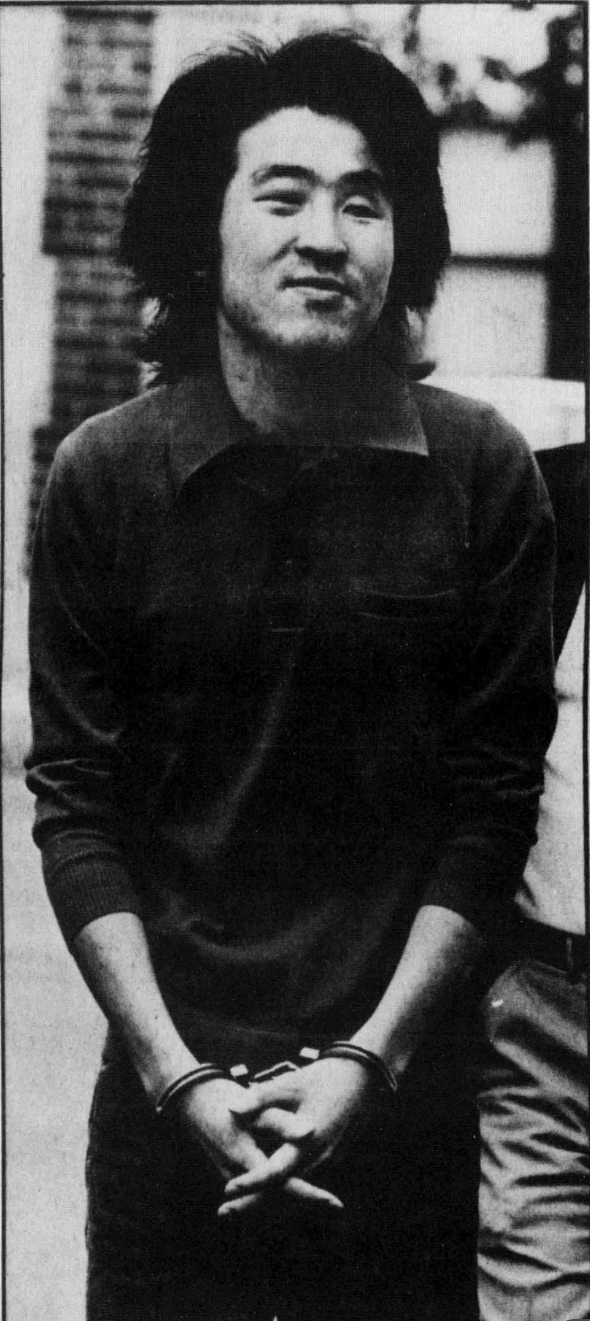
Over a year later, on October 4th, 1984, Kim was sentenced to 25 years to life for 1st degree manslaughter and 2nd degree murder by then Tompkins County District Attorney Benjamin J. Bucko. He was not found guilty for charges of unlawful imprisonment, despite having held six people hostage in Young Hee’s dorm room.
Jane never had to return to her dorm in Low Rise 7. That January, her mom and brothers retrieved her belongings, and she was moved to another dorm with two new roommates, who were not informed of what had happened. Still, the image of the room has never left her memory.
In the spring semester, David Drinkwater, then Dean of Students reached out to Jane and they began meeting every week to discuss what had happened. Every week, Jane says, “I would think I was fine. [Then,] I would burst into tears every time.” Jane, in an effort to heal her and her friends, hosted counselling sessions with Drinkwater and around thirty students; she would later become a student EARS (Empathy, Assistance & Referral Service) Counselor.
After this tragedy, Alfredo had some moments of such intense grief that they are blocked from his memory, including his plane ride home to Puerto Rico after Erin’s funeral. His parents initially refused to let Alfredo return to Cornell, but eventually relented. At school he performed poorly, but was mentored by then Dean of Students, David Drinkwater, and longtime Cornell professor and then Dean of Arts and Sciences, Glenn Altschuler. Both helped Alfredo through his grief and allowed him to transfer all of the credits he had previously taken in the pre-dental track to the Communication major, saving his family a large financial burden.
Kelly remembers speaking very little with her family about Erin. At Christmas, they opened presents that Erin had bought for them, and tried somehow to live as they had. When Erin died, Kelly was a freshman in high school, and she said that much of the rest of high school was a haze.
Peter never attended therapy. Even before the shooting, he was not prepared for Cornell. The next couple of semesters for Peter were “a joke.” He was eventually suspended for a semester for his poor academics. When he returned, he switched majors, graduated, and would later go on to open Viva Tacqueria in Ithaca, which he operated for over 30 years.
The reality is different. “It’s harder now than it’s ever been,” Kelly told me. “The older you get, the more you miss because [Erin] and I could be sitting on my deck right now… I could not be having a conversation with you. I could be having a conversation with her.”
Alfredo spent years trying to replace that last memory of Erin in a hospital bed with that of Erin and him at her house over Thanksgiving. Every time he thinks about Cornell, he cannot help but recall what happened. Jane and Kelly both told me that whenever there is a school shooting in the news, they are brought back to that horrible moment four decades ago.
When I spoke to Peter, he emphasized how small Kim’s gun had been. He told me if he were in that room again today, he would have tried to save Young Hee and Erin.
Erin’s parents, in the aftermath of the event, sued Cornell for negligent practices. How could a school that promised to keep its students safe let something like this happen? The civil case lasted years. While Jane and her friends were still students, Cornell’s lawyers grilled them in court, even going as far as to blame them for what had happened to Young Hee and Erin.
Ultimately, in 1989, an in-court settlement was reached. Cornell paid $200,000—about $520,000 in 2026—to the Nieswand’s. Young Hee’s mother may have also sued, but I was unable to find evidence that the case ever went to court.
Kim died in New York’s Mid-State Correctional Facility a little over four years ago, on August 25th, 2021, thirty-eight years after he murdered Erin and Young Hee. His death went unreported.
Those I spoke to were unaware that Kim had died. Jane told me, “It makes a big difference.” After spending years struggling to feel safe in her own room, she sleeps better at night knowing Kim is dead.
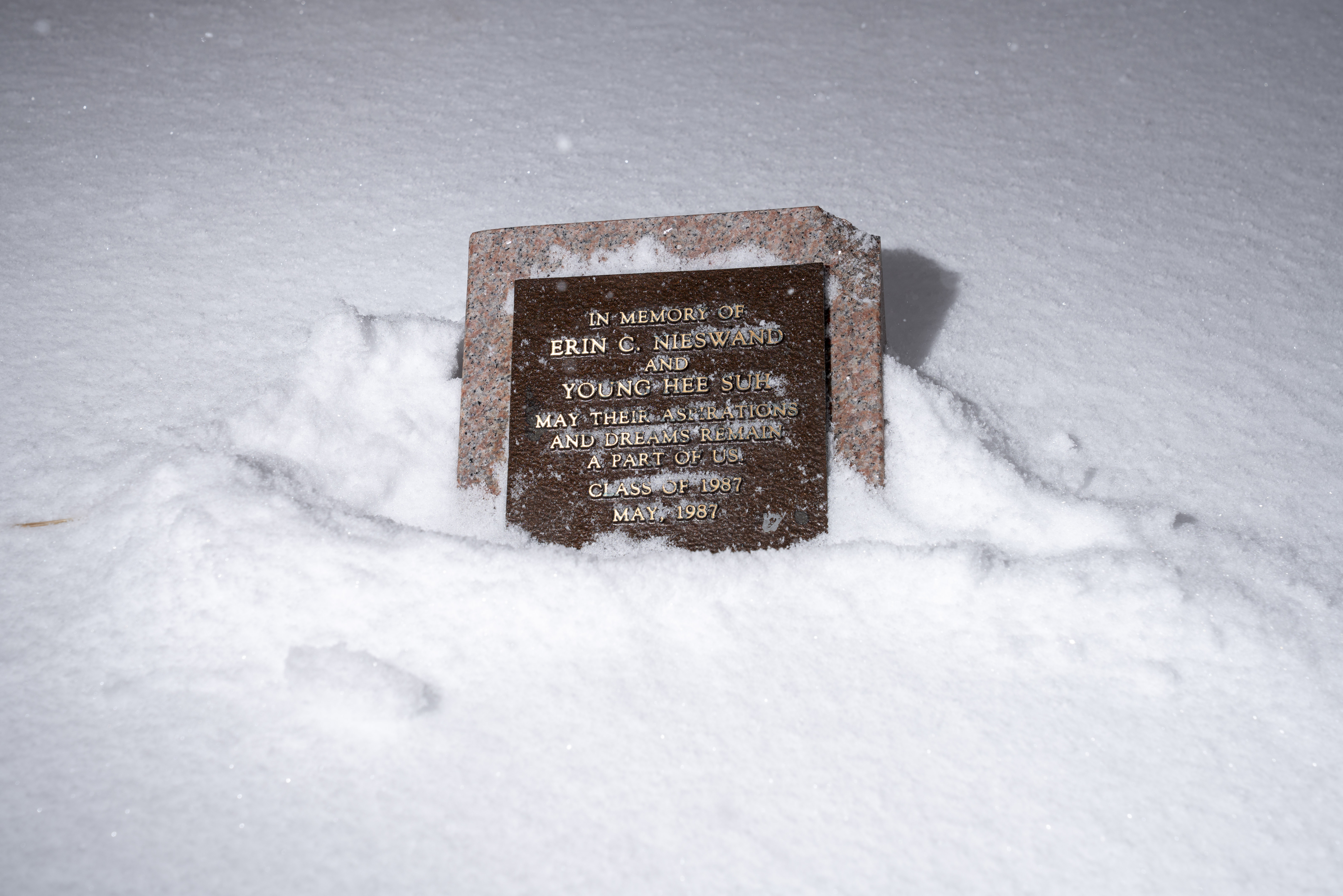
We searched for the plaque and two pine trees that Jane told me she had dedicated to Young Hee and Erin during her senior year at Cornell in 1987. After circling the building twice, Caleb and I finally found a plaque, covered in snow, placed between two towering pine trees behind the dorm, next to the parking lot.
The plaque was only a bit bigger than my hand. I carefully wiped snow off the memorial. It read: “In memory of Erin C. Nieswand and Young Hee Suh. May their aspirations and dreams remain a part of us.”
Those two Austrian pine trees, nearly 40 years old, are monuments to the lives these two women never lived. If Erin and Young Hee were alive today, they would be my mom’s age. But now, as it is, they are stuck a year or two younger than me, terrified and alone in a place they briefly called home.
After staring silently for a few minutes, Caleb and I decided to go inside the dorm building. Without an ID that would open the door, we were uncertain if we would be able to get inside. Within a minute, a maintenance guy opened the door for us. We said we were going to see friends. He said, “I’m really not supposed to do this,” and begrudgingly let us in. It turns out, it is about as easy to enter the dorm as it was 42 years ago.
As soon as I stepped inside, I wanted nothing more but to leave. We walked throughout the convoluted building, trying to find the exact dorm where it happened. But it felt wrong, and we stopped. We couldn’t find our way out. I thought of the students that night, stuck in this creaking old building, terrified.
We quickly left. Caleb stayed to take a few more photos of the outside, and I wandered back to my dorm and called my mom. I told her about the article, and she told me that my sister, who graduated in 2024, had spent her freshman year in Low Rise 7.
In the past few months, I asked several of my friends if they had heard of this tragedy. Almost every person I asked knew next to nothing. They had either never heard of it or were only vaguely aware of the details. If they had any information at all, it was largely inaccurate. In historical newspapers and even court records, it is constantly confused that Kim and Young Hee were dating or that Kim was a “spurned lover.” If my friends knew anything about this tragedy, it was through this lens. But this is a cruel misrepresentation of the facts. Kim was an obsessed stalker who harassed a teenage girl before killing her and her roommate.
This lack of knowledge is not unique to the current student body. After the Brown University shooting, a Reddit post surfaced, referencing these Cornell murders. A couple of users, who were on North Campus right after the murders, remember hearing nothing of it. The details of this story have, unfortunately, remained as murky as they were in the immediate years afterwards. If you search for it online, you will be met with only a couple of archived New York Times articles and a Cornell Daily Sun article from 2008 following the shooting on Virginia Tech’s campus that claimed the lives of 33 people.
So why have we forgotten this point in Cornell’s history? A lawsuit against Cornell may have something to do with it, but I think it is more likely that people, intentionally or not, choose to forget. Tragedies are difficult things to swallow. We do not enjoy lingering on cruel losses of life.
But we, the Cornell community, must ask ourselves what it means to forget. What happens when tragedy and loss fade out of our public conscience—when each school shooting becomes just another tally? What happens when lives ruthlessly stolen are forgotten?
The Brown University shooting was shocking, but only momentarily. Gun violence is so routine that each new death, each new shooting, simply gets muddled and lost in a sea of meaningless statistics, or worse, in harmful inaccuracies.
I could tell you, as I did, that two people died, and nine more were injured in Providence on December 13th, 2025. I could tell you that the lives of Ella Cook and MukhammadAziz Umurzokov were taken brutally, by a deeply disturbed man. But you could not possibly understand the fullness of the lives they lived. What do Erin Nieswand or Young Hee Suh’s lives mean if you have never met them, never will meet them, and never will meet anyone who knew them? What would the world look like if these two women had not been killed? What would the world look like if we didn’t find it so easy to forget?