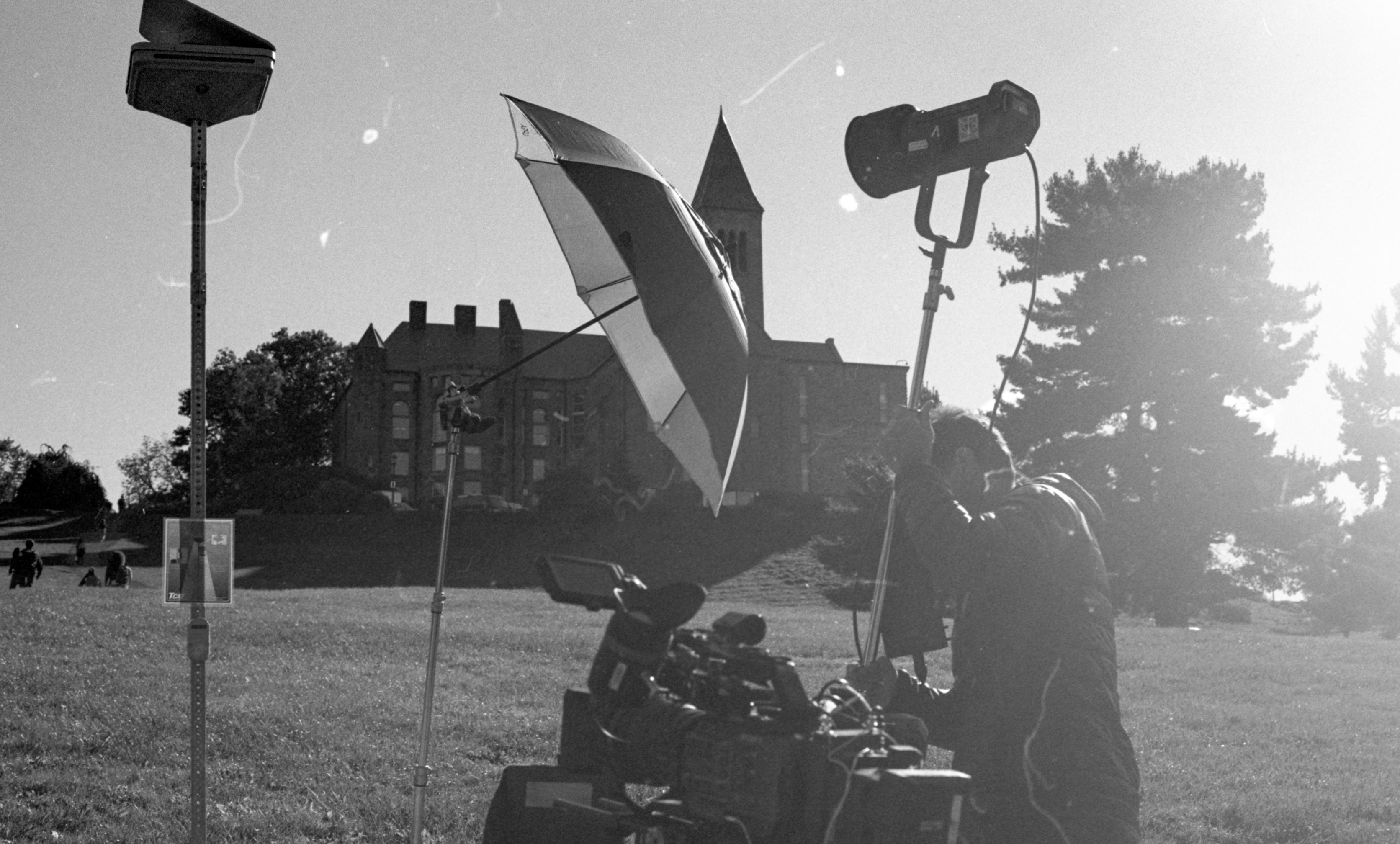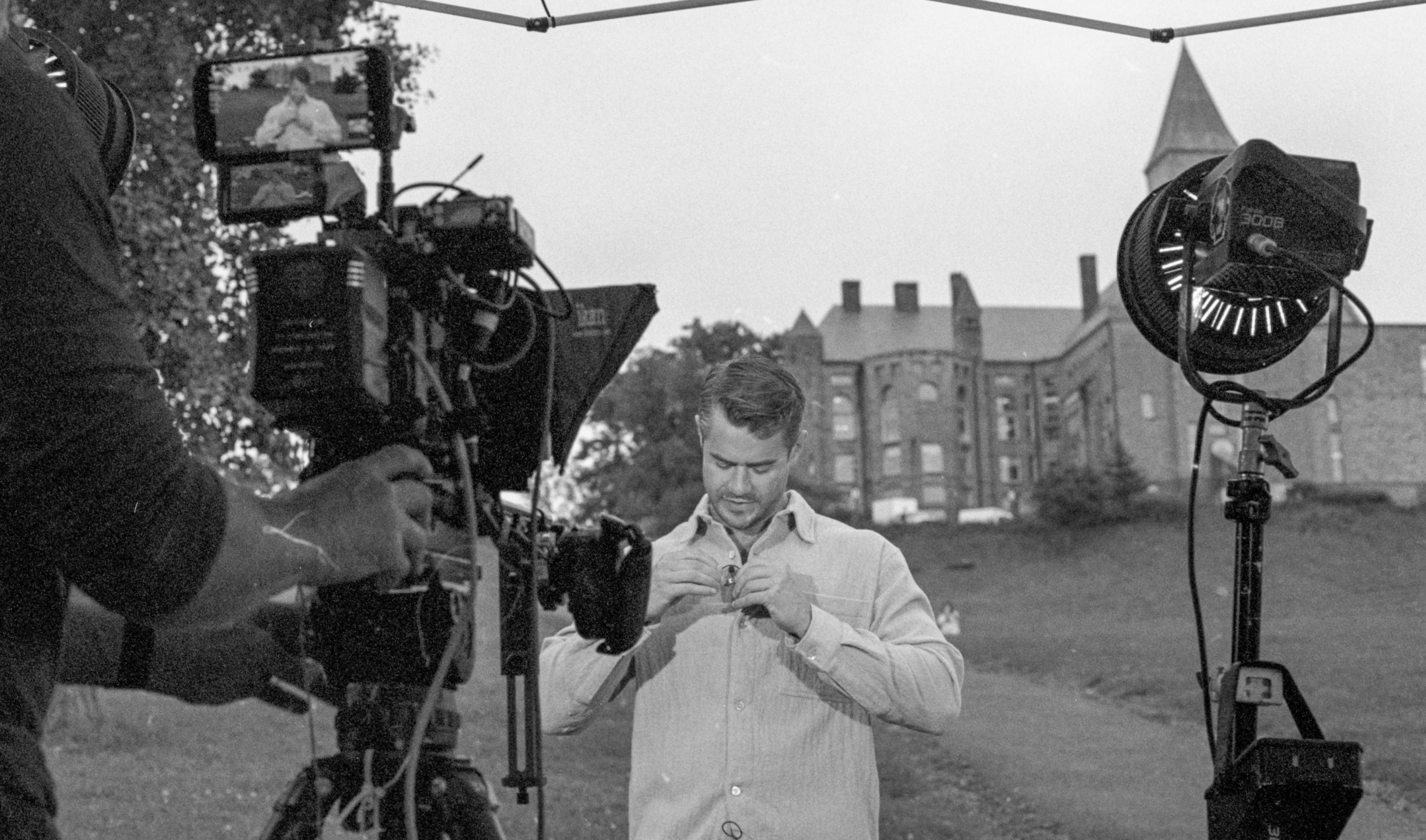
Then the live shot was over, and Hanson, who had been awake that morning since 3:30 and had not yet eaten, squatted over a bag of Jersey Mike's and began devouring a sub sandwich. Neither he nor his crew could speak on the record about the impact of their reporting on the student body; the higher-ups had told them not to. A producer was on the phone with the studio. The cameraman was texting as a few cars passed and honked at the CBS crew. One passerby sneered something: “Go home.”
As the alleged gangrape of a Cornell student was widely publicized in the news and on social media last week, networks flocked to Ithaca to get a scoop. Students have been personally contacted via text and Instagram, have sat for interviews on national networks, and now make up countless hours of B-roll and establishing shots.
Among others, CBS, CNN, NBC, the BBC, and The New York Times have all made their presence known in what several reporters I spoke to referred to as “your home.” None of the regional, national, or international reporters I interviewed for this story could speak on the record regarding their coverage of Cornell. For me, that raised the deeply unsatisfying feeling that the views of a community of young adults were available for public discussion—but the methods, intentions, and motives of the established press were not.
The word “sensationalized” stuck with me as I spoke to other students. On one hand, the coverage of a heinous alleged crime and its associated administrative and societal failures seems necessary to bring about any possible reform. On the other, students bear the burden of an enormous spotlight at a disturbing, tumultuous, and anxious moment. One reporter from a major national news network told me she was appalled to see members of the press confronting students with cameras and microphones, hawking them down for interviews. If the language used in media coverage is any indication of its intentions, then The Wall Street Journal is one such outlet with no interest in constructive dialogue. The paper’s recent headlines read: “A Firestorm Over Rape Allegations Threatens to Engulf Cornell”; “How Explosive Rape Allegations Have Left Cornell’s Campus Reeling”; and “Cornell Rape Allegations Reignite Furor Over Title IX”.
One reporter from a major national outlet said, in a tone that resembled an alien force declaring its intentions: “We are here to give a platform to students who are impacted by these really horrible allegations. We are not here to shove a camera in anyone’s face during a tough time involuntarily.”
“I think the story is really important and it’s important for us to be here,” the national journalist continued. “It’s important for survivors, it’s important for students, and, as uncomfortable as this subject matter is for so many people out there, it’s a necessary dialogue that needs to happen.”
One reporter from a smaller regional outlet shared that he was getting his toes stepped on by those national networks. “It’s not often that the biggest story in the country comes to our area,” he said. He added that he was “just trying to capitalize on this.” As a working journalist, it didn’t seem to dawn on him that the story he was covering was more than just an opportunity upon which to “capitalize”. It has been, for Cornell and Ithaca, a reality that weighs upon every single resident’s mind, and this fact—this feeling—has struggled to find its way into recent media coverage.
This same reporter had covered the pro-Palestinian student movement and the university’s harsh response over the last three years. He was “not surprised” by the recent case or the complaints regarding the university administration. “It’s in line with what I’ve come to know about how people feel about this university,” he said soberly.
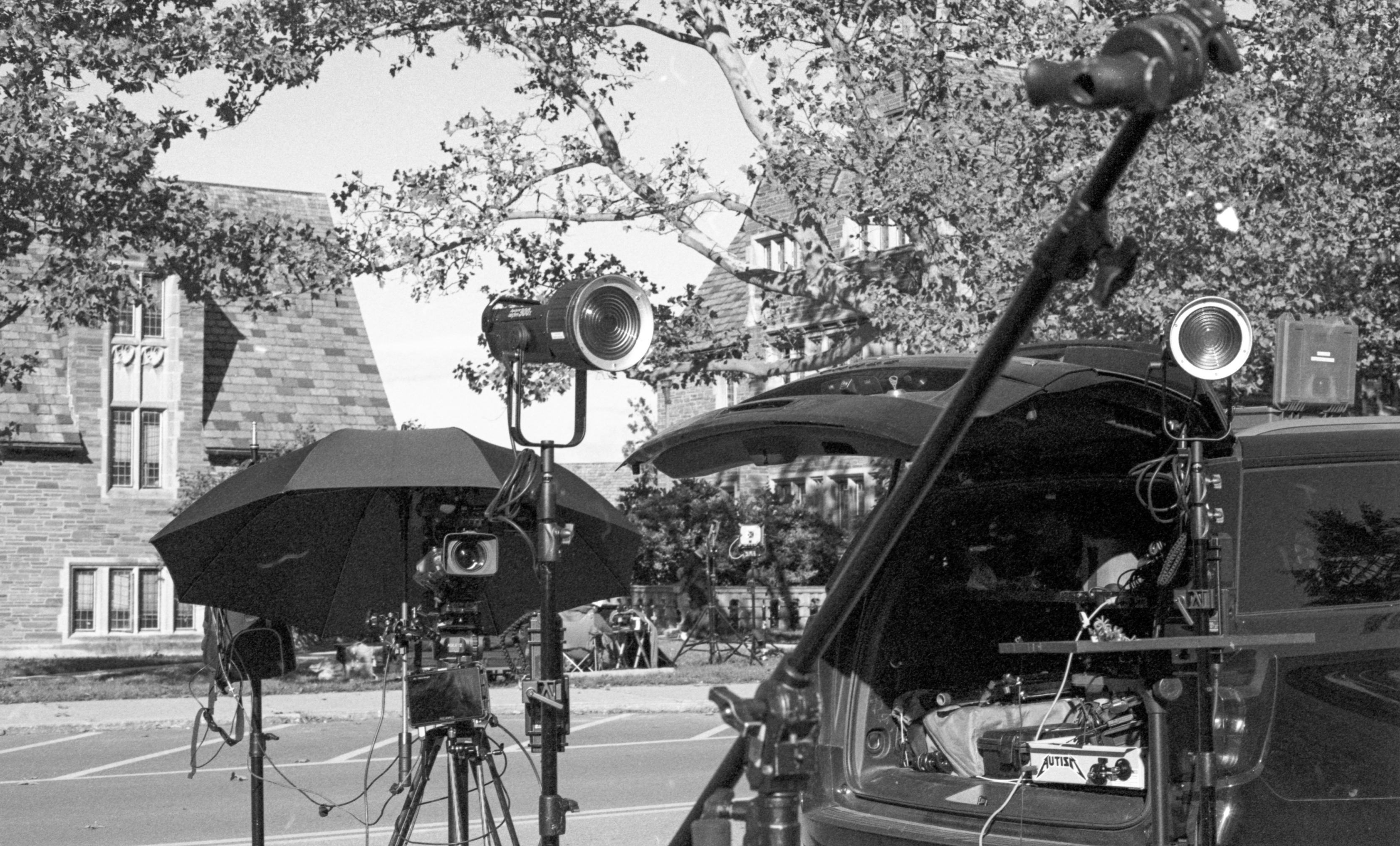
At the top of the slope, where the girl was looking, a photojournalist was on an international assignment for a foreign news agency. He squatted down to capture students walking.
“I can understand that it might feel like the journalists are these vultures descending on campus seeking to extract material for their outlets,” the photographer said. “I can understand how it feels very one-sided.”
“Journalists are popping in and then mostly popping out, but the effects of what has happened here are going to last for years and years,” he said. “Most journalists aren’t going to be around to tell the story of those long-term effects.” He offered no solution, however, deferring the responsibility of any extraction to the editors and executives who told the journalists to come and go. “We’re just doing our jobs, we’re doing what we’re assigned to do,” the photographer said in a dull tone. “Journalists are all cogs in a wheel just like anyone in any other industry.”
I pointed down the slope and asked him why a news station would set up facing a hill, instead of, say, the university administration building: Why focus on the students? “With visuals,” the photojournalist said, “we need to make it clear that we are on a college campus.” It was this fact, several journalists told me, that made the story so shocking, so appalling, so viral—and so important to be covered. The alleged crimes were so heinous, the official response so disappointing. And yet, at the same time, I wondered if the press had really realized this fact—that they were on a college campus and should proceed with the grace, sensitivity, and care requisite to report on a college community.
By then, the sun had slipped below the other side of the valley. The sky above Cayuga Lake was yellow and fiery, but not explosive, not a firestorm. Just a sky. On a cool, calm evening.
A few students had lined up their Lexuses, BMWs, and Nissans as part of an amateur car meet. Two buddies on a road trip were marveling over Ithaca; they were decked out in Bills gear and one wore a bobble-headed Buffalo football costume. Dozens of students were hanging around, taking pictures of the end of the sunset, stringing lights around the trunk of a tree on the slope, setting up for the Chinese Students’ Association’s Mid-Autumn Festival. The newscaster at the bottom of the hill packed up a tripod and the light panels and left.